Table Of Content

Into the 50s, save the odd wreath laying, the only mentions of Beethoven in the L.A. In 1951 Pershing Square was completely destroyed in order to build the five million dollar underground parking garage. If we could personify an inanimate object for a moment -- it may have come as a relief to Beethoven, he who had once been hailed heroic, when he was transferred to storage at Griffith Park for the duration of construction. But in 1952, when he was repositioned at the northwest corner of the new Pershing Square, at the intersection of Fifth and Olive, he was filthy, the city having been unwilling to shill out the $300 needed for a good cleaning. William A. Clark Jr., senator's son and copper baron, had founded the Philharmonic a year earlier, in 1919. An amateur violinist, he would often sit in with musicians as they played.
SJSU Researchers Study Beethoven's Hair, Unlock New Secrets About His Life, Death
The two men selected Walsh to determine if there were any scientific lessons to be learned from the hair. Nearly 200 years after Ludwig van Beethoven’s death, researchers pulled DNA from strands of his hair, searching for clues about the health problems and hearing loss that afflicted him. In 2007, a high lead content had been detected in said curl and it was wrongly assumed that Beethoven had died of syphilis — a disease that was treated with lead-containing medicine at the time. One of the locks did not yield enough DNA to study, and another proved to be inauthentic. But five had DNA that matched, indicating they came from the same person of European descent—and they had damage patterns one would expect in samples from the time of Beethoven’s death. Nearly 200 years after Ludwig van Beethoven’s death, researchers pulled DNA from strands of his hair, searching for clues about the health problems and hearing loss that plagued him.
Top Health Categories
The Moscheles lock (seen here) was taken from Beethoven around the time he died in 1827. Medicals historians have speculated that otosclerosis—a condition in which a tiny ear bone called the stapes fuses with other parts of the ear—might have been responsible for Beethoven’s hearing loss. The genetic causes of otosclerosis are yet to be identified, so this remains possible, but the theory cannot be confirmed by this study. Begg says that if genetic links are identified in the future, the team could recheck Beethoven’s genome. DNA extracted from hair cut from the composer’s head after his death also contained fragments of the hepatitis B virus, which can cause liver damage.
Medical Links
Unlocking the code to Beethoven's life through his hair - DW (English)
Unlocking the code to Beethoven's life through his hair.
Posted: Thu, 30 Mar 2023 07:00:00 GMT [source]
After Fremming's death, his daughter assigned it for sale with Sotheby's and it was purchased by the two Americans, who then launched the research project. The journey of the hair is the subject of a book, Beethoven's Hair, which is being released this week by Broadway Books, and was written by Russell Martin. This Sunday marks the 196th anniversary of Beethoven’s death in Vienna on March 26, 1827. The composer wrote that he wanted doctors to study his health problems after he died. "We had to bring in cooperation partners with different expertise," Krause explained to DW.
Among the disenfranchised men and women who spent their days in this quiet patch of park was a man with a two string violin, whom L.A. Times reporter Steve Lopez discovered playing sonatas under Beethoven's watchful eyes. A journeyman sculptor/architectural engineer who claimed to have studied at the Vienna Academy of Art, he was said to have sketched in Asia and built railroads in Brazil before moving to Glendale in the late teens. He had married a former stage actress named Willa Wakefield, and settled into a very middling career producing commercial art.
In 1928, a testimonial concert honoring Clark had raised money for a memorial, and in 1932 plans were started for the commissioning of a statue of Clark's favorite composer, Beethoven. The Philharmonic would use the testimonial concert funds to make the statue and then donate it to the city, so that it could sit in Pershing Square, eternally staring at the Philharmonic Auditorium, imposingly standing directly across. Seven feet and ten tons of bronze, he is walking with his hands clasped behind his back, his vest unbuttoned, a look of intense concentration on his face. He, along with these other forgotten statues, was once in a place of great honor, back when Los Angeles was trying admirably to become the city it thought it needed to be. “The procurement of the sample material alone is admirable,” says Christian Reiter, a forensic medical specialist at the Medical University of Vienna who authenticated a portion of Beethoven’s skull in 2022. Beethoven’s lock of hair was presented to Maria and it stayed in her and Halm’s family for years, before being handed down to one of Halm’s pupils.
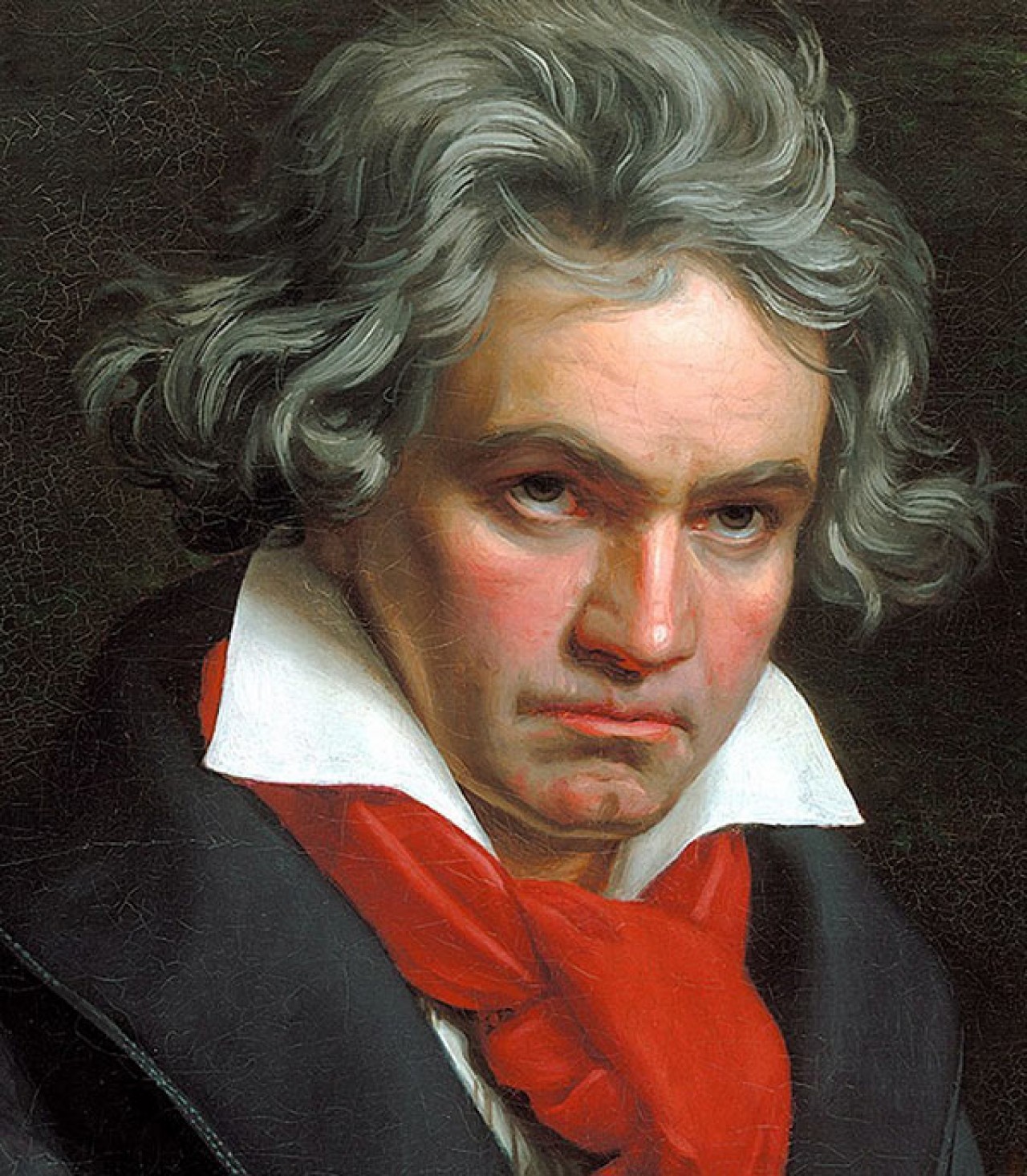

“He gave me a sheet of paper containing a considerable quantity of his hair, which he had cut off himself,” Halm himself recalled. The hair in question was by all accounts snipped from the great composer’s magnificent mane in 1826 at the request of 19th-century pianist Anton Halm, who wanted to present the keepsake to his wife, Maria. Begg reviewed the records carefully and concluded Beethoven’s alcohol consumption was likely unexceptional for the time and place, but may have still been at levels now considered harmful. One of the misattributions is significant in itself, because it was the basis of earlier research that concluded Beethoven had been subject to lead poisoning.
A new U.S. tool maps where heat will be dangerous for your health
The hair used in this test is that same lock of hair that recently gave us insight into Beethoven’s health condition. Beethoven died in 1827, with liver disease being the likely leading factor. In a 2023 study led by Cambridge University and published in Current Biology, a team of researchers sequenced Beethoven's genome via locks of his hair to understand his health problems.
"The lock offered itself because it had a relatively large amount of hair and the owner of this lock said that he was happy to sacrifice the hair for the research," Krause says. To get the DNA, the hair had to be dissolved, which means the collector's lock would no longer exist. As a master's student, Bregg was able to enlist Professor for Archaeogenetics Johannes Krause in his idea. Krause specializes in analyzing historical DNA at the Max Planck Institute for Evolutionary Anthropology in Leipzig, Germany. Bregg then earned his doctorate in archaeology at Clare Hall College at the University of Cambridge in the UK, where he conducted research on Beethoven's DNA.
From the hair samples, the researchers didn’t find any genetic evidence explaining Beethoven’s hearing loss or gastrointestinal problems. They could not explain the severe abdominal pain he suffered as an adult or his “prolonged bouts of diarrhea,” per the paper. They weren’t able to crack the case of the German composer’s deafness or severe stomach ailments. But they did find a genetic risk for liver disease, plus a liver-damaging hepatitis B infection in the last months of his life. In 2014, an international team of researchers started working on sequencing Beethoven's genome for more clues into his condition.
"People will include that in future publications. And it's also interesting for medical historians," she says. But nothing can be proven, she adds, because even the five matching hair samples could hypothetically not be Beethoven's. "If at some point we find out what happened, we will include that in our biographical writings." Further investigation comparing the Y chromosome in the hair samples with those of modern relatives descending from Beethoven's paternal line point to a mismatch. It seems there was a bit of extramarital hanky-panky happening in the generations leading up to the composer's birth. In 2007 a forensic investigation into a lock of what was believed to be Beethoven's hair suggested lead poisoning could have hastened his death, if not have been ultimately responsible for the symptoms that claimed his life.
Strand of Beethoven’s hair offers clues into the composer’s death - NBC News
Strand of Beethoven’s hair offers clues into the composer’s death.
Posted: Wed, 22 Mar 2023 07:00:00 GMT [source]
Lead poisoning initially may cause no symptoms; over time, however, damage to the nerves may result in pain, numbness or tingling of the extremities and muscular weakness. Other symptoms include anemia, headache, abdominal pain, memory loss, unsteady gait and kidney damage. Beethoven’s health was normal as a child; his symptoms didn’t appear until his 20s. The eight hair strands studied showed an average concentration of lead of 60 parts per million. A recent study at the Pfeiffer Treatment Center in Naperville, Illinois, of 6,205 patients found only 11 with levels above 60 ppm, many of whom reported abdominal distress, irritability and depression–just like Beethoven.
Science News and our parent organization, the Society for Science, need your help to strengthen scientific literacy and ensure that important societal decisions are made with science in mind. "We were unable to find a definitive cause for Beethoven's deafness or gastrointestinal problems," says Krause. In a letter addressed to his brothers, Beethoven admitted he was "hopelessly afflicted", to the point of contemplating suicide. The primary cause of that hearing loss has never been known, not even to his personal physician Dr Johann Adam Schmidt. What began as tinnitus in his 20s slowly gave way to a reduced tolerance for loud noise, and eventually a loss of hearing in the higher pitches, effectively ending his career as a performing artist. Today it is no secret that one of the greatest musicians the world has ever known was functionally deaf by his mid-40s.
The compositions belonging to the years at Bonn—excluding those probably begun at Bonn but revised and completed in Vienna—are of more interest to the Beethoven student than to the ordinary music lover. They show the influences in which his art was rooted as well as the natural difficulties that he had to overcome and that his early training was inadequate to remedy. Three piano sonatas written in 1783 demonstrate that, musically, Bonn was an outpost of Mannheim, the cradle of the modern orchestra in Germany, and the nursery of a musical style that was to make a vital contribution to the classical symphony. But, at the time of Beethoven’s childhood, the Mannheim school was already in decline.
“We don’t know when he got it or how he got it,” says Begg, who suspects that Beethoven had a chronic, dormant infection that was reactivated in the months before he died. Widely regarded as the greatest composer who ever lived, Ludwig van Beethoven dominates a period of musical history as no one else before or since. His personal life was marked by a heroic struggle against encroaching deafness, and some of his most important works were composed during the last 10 years of his life when he was quite unable to hear. In an age that saw the decline of court and church patronage, he not only maintained himself from the sale and publication of his works but also was the first musician to receive a salary with no duties other than to compose how and when he felt inclined. Although his deafness did not become total until 1819, the first symptoms of the impairment manifested before 1800. Later he disclosed “that from a distance I do not hear the high notes of the instruments and the singers’ voices.” Beethoven’s hearing loss didn’t stop him from composing music, though.
It was Beethoven’s grandfather who had first settled in Bonn when he became a singer in the choir of the archbishop-elector of Cologne; he eventually rose to become Kappellmeister. His son Johann was also a singer in the electoral choir; thus, like most 18th-century musicians, Beethoven was born into the profession. Though at first quite prosperous, the Beethoven family became steadily poorer with the death of his grandfather in 1773 and the decline of his father into alcoholism. By age 11 Beethoven had to leave school; at 18 he was the breadwinner of the family. Of the eight locks of hair analyzed, seven yielded enough DNA for interpretation. A DNA analysis also was performed and has defined a significant portion of Beethoven's genetic make-up.


No comments:
Post a Comment